
Lift as a sculptural element
In the high-stakes landscape of Queenstown residential architecture, where the view is paramount and the material palette is rugged yet refined, vertical circulation must do more than simply move people between floors. It must act as a sculptural element that respects the spatial flow of the home.
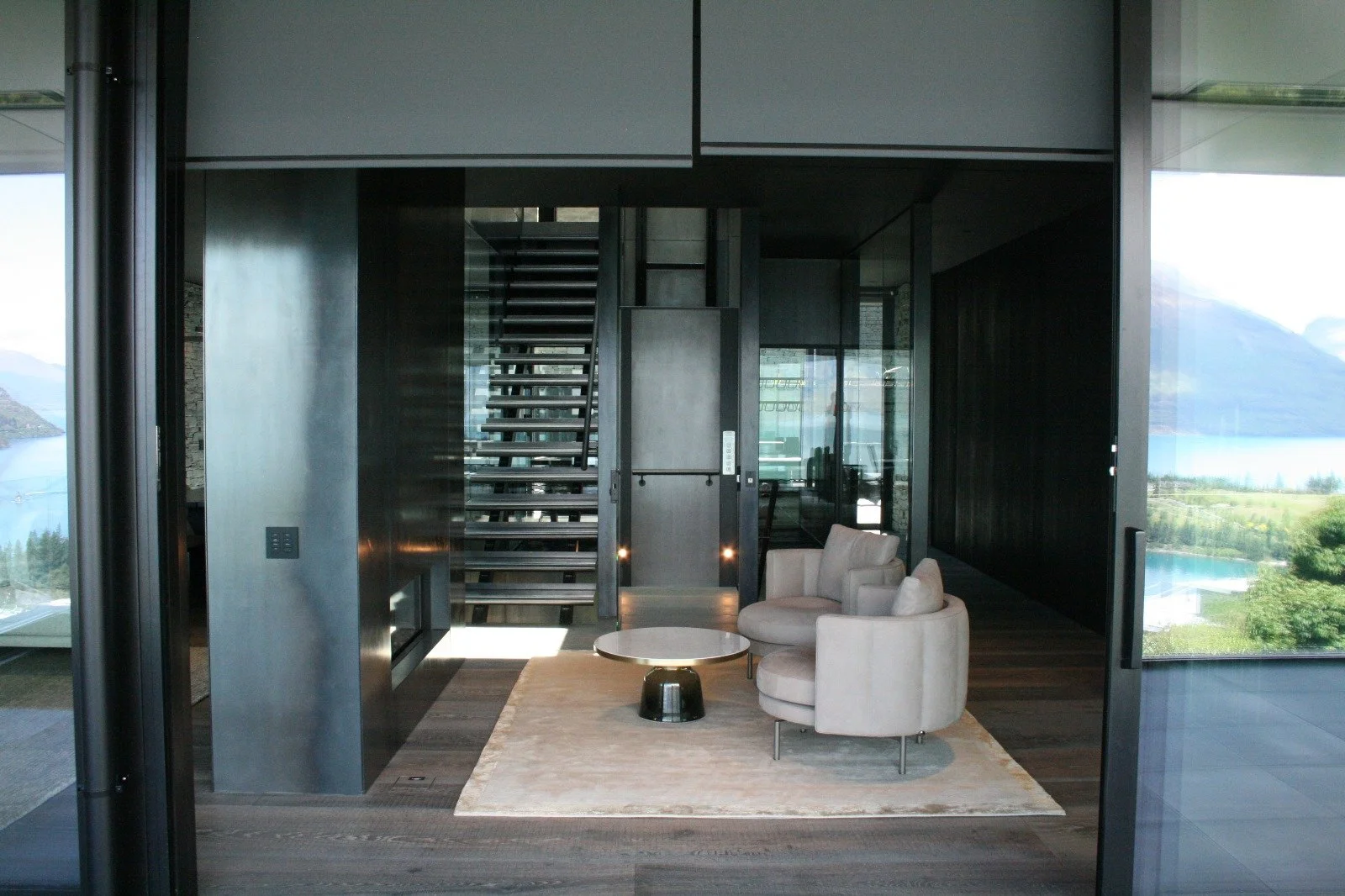
Powerglide’s recent commission near Queenstown’s center exemplifies this philosophy. Set within a striking new build characterized by raw schist, vast glazing, and moody, monochromatic interiors, the brief was to install a lift that acted as a central anchor for the residence without interrupting the sightlines to Lake Wakatipu.
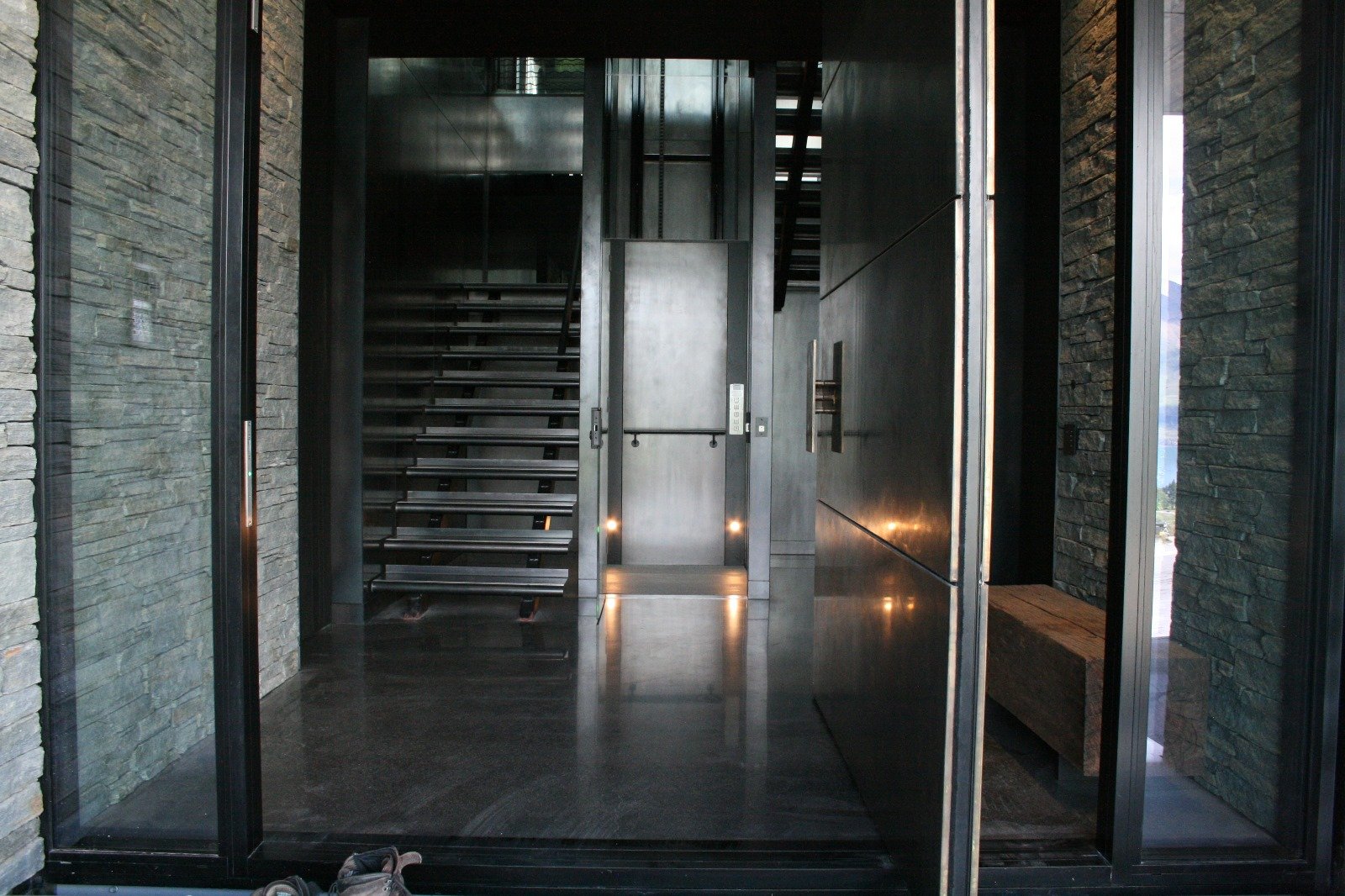
“The resulting installation is a masterclass in modern industrial integration. ”
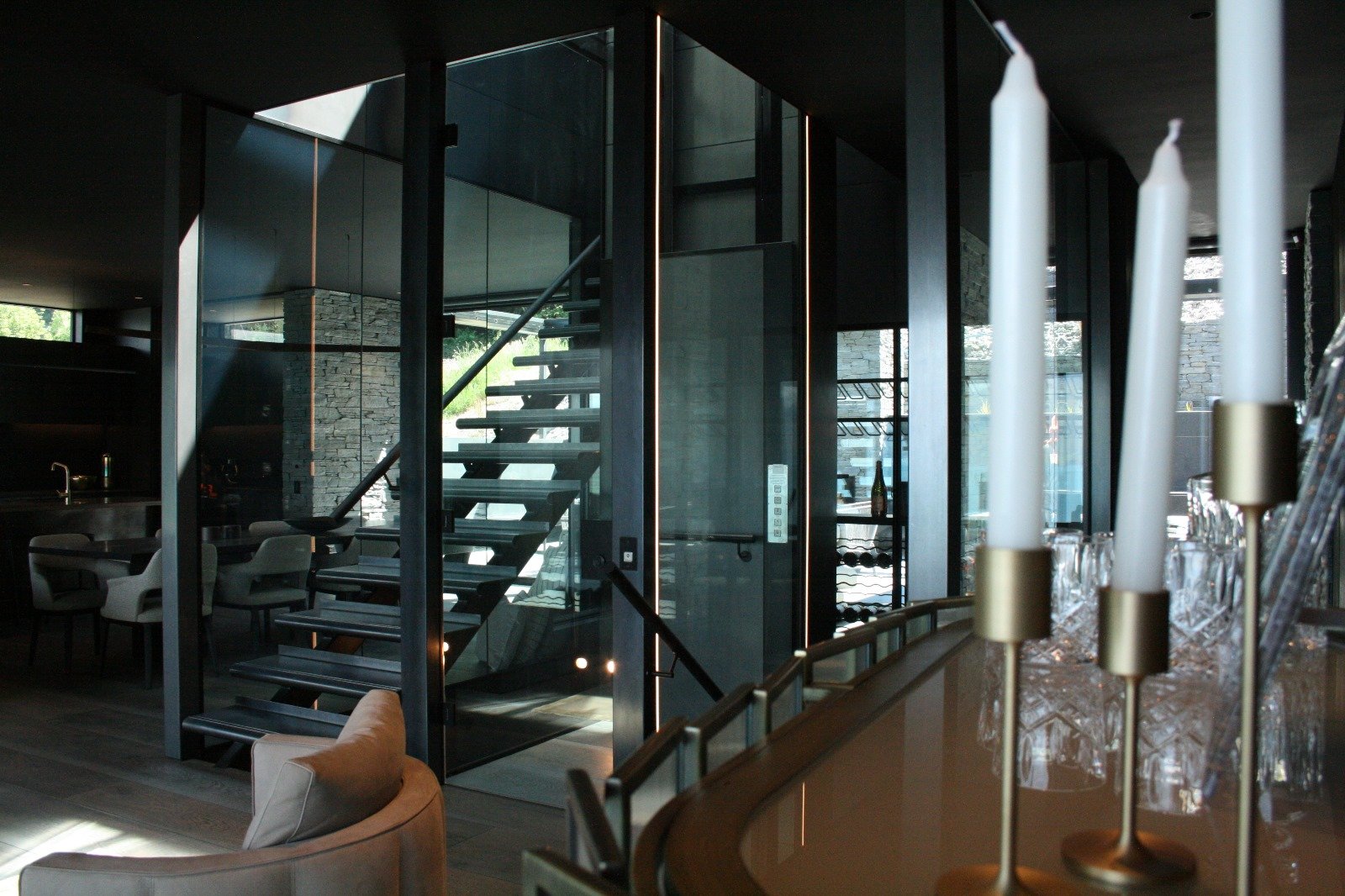
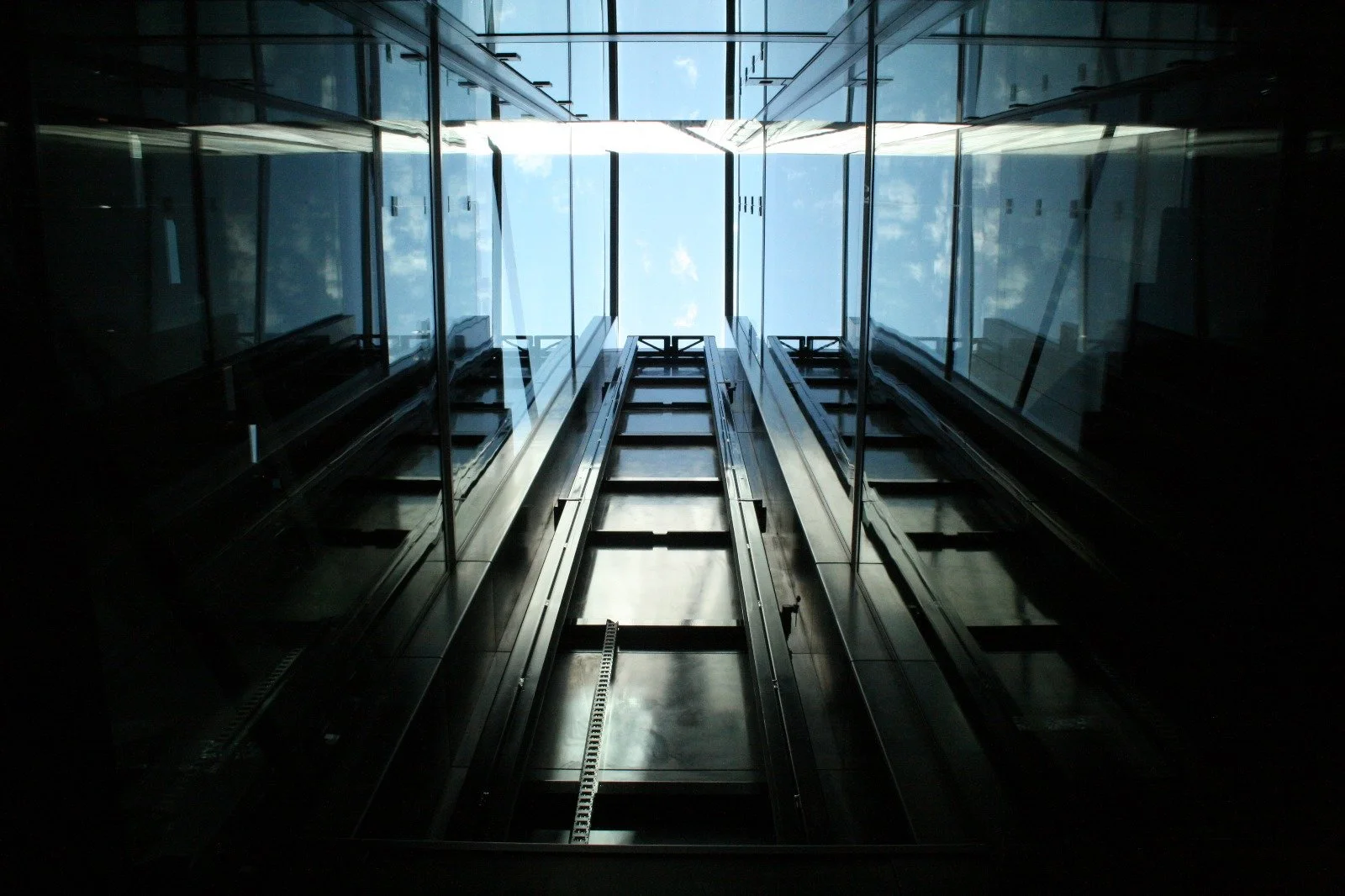
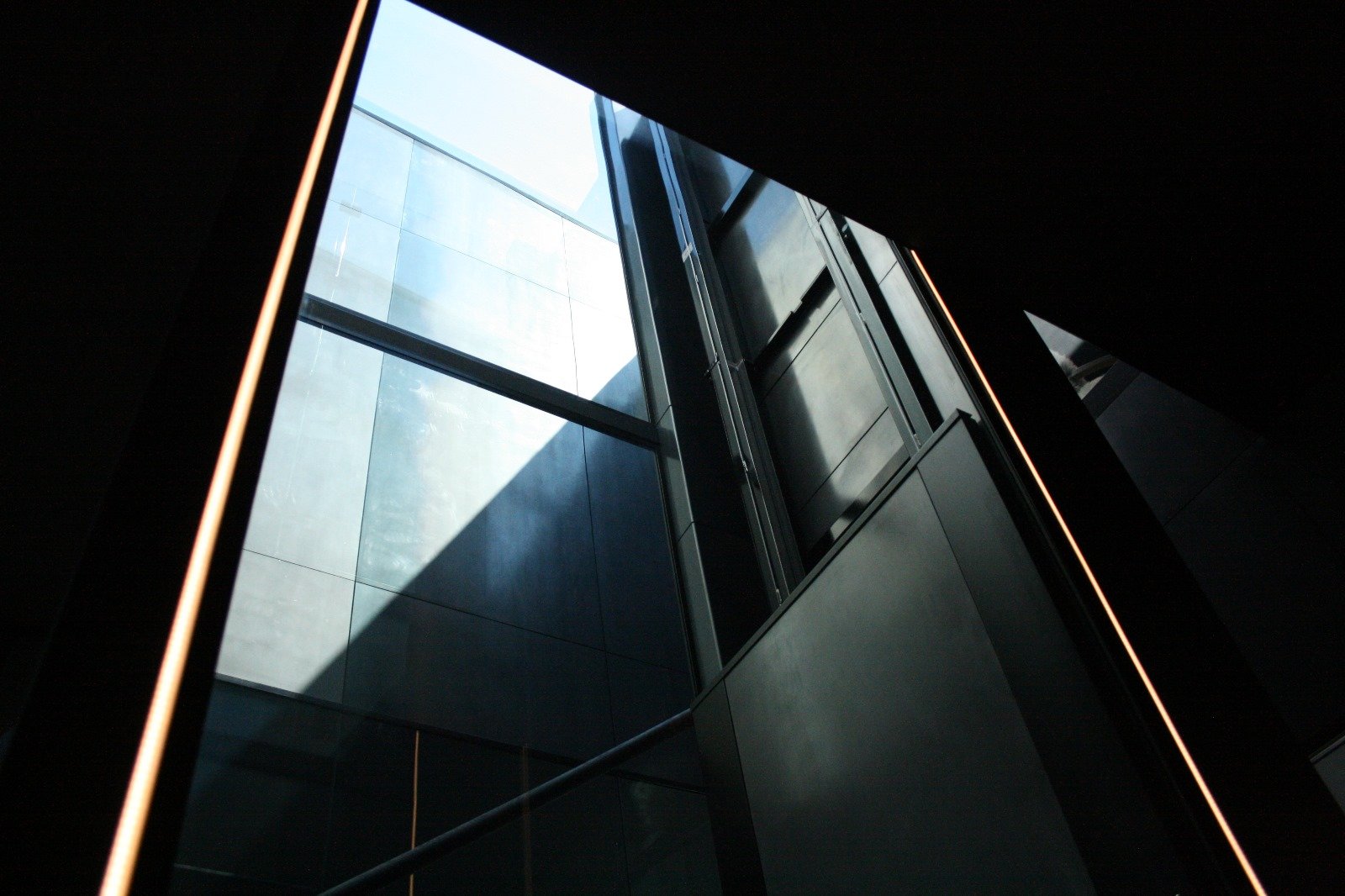
The resulting installation is a masterclass in modern industrial integration. The lift shaft features a custom glass enclosure framed in dark, minimalist metalwork that complements the home’s structural steel and window joinery. Rather than a solid column that blocks light, the transparent shaft works in tandem with the adjacent floating staircase. It preserves the volume of the atrium, allowing natural light to cascade down from the roof glazing to the lower levels.
Functioning as the home's "spine," the Powerglide lift connects the garage and entry levels to the upper living areas. The design creates a dynamic interplay between the mechanical movement of the car and the static strength of the surrounding stone and timber. Integrated vertical strip lighting accentuates the shaft’s height, turning the lift into a glowing architectural feature at night.
For this project, the lift is not a utility hidden behind a drywall door; it is a celebrated component of the interior architecture, proving that mechanical necessity can be elevated to high design.
Location: Queenstown, Central Otago
Powerglide Elevator Specs: 1000 x 1400mm
Weight Capacity: 350kg
Lift Configuration: Open Car
Design & Manufacture Time: 10 weeks
Install Time: 2 weeks
Design & Installation Process: Process managed by Powerglide’s specialist in-house engineering and cabinetry team in conjunction with client and clients expert carpenters
Architect: Hulena Architects
Building Contractor: YBL Building
Maintenance/Servicing Requirements: Maintenance-free for the first five years
Complies with: NZS 4334:2012
Mechanism: Hydraulic drive with self-supporting rails
Speed: Around 9 seconds, floor-to-floor
Manufacture: Manufactured in New Zealand using locally sourced materials and componentry